Last updated: October 10, 2026. On October 8, 2026, Anthropic launched OSS Scanner — a free, opt-in vulnerability-finding service for open-source projects, scanned periodically by its strongest models including Claude Mythos. It is already one of the most discussed security launches of the year, for both its results and its unusual design choice: reports reach maintainers without human review.
What OSS Scanner is
Inspired by Google's OSS-Fuzz, OSS Scanner applies large language models instead of fuzzers. Enrolled projects receive thorough periodic scans at no cost, and Anthropic covers the full bill through a $35 million Defender Advantage Fund of Claude credits. The service builds on Project Glasswing, Anthropic's earlier vulnerability-disclosure work, which had reviewed over 6,000 reports by October 2026.
What reports contain
Each finding arrives as a bundle that includes a self-contained reproducer, an explanation of the vulnerability, a bisection to determine when the bug was introduced (where possible), and a candidate patch when available. Scans run in isolated VMs with network access disabled during the audit phase — a design aimed squarely at supply-chain attack vectors.
The accuracy numbers, honestly
- 29,439 candidate vulnerabilities found to date
- 6,123 findings reviewed by external security firms; 5,674 confirmed — a 92.7% confirmation rate
- Of 97 critical/high findings audited by expert penetration testers across 48 projects, 85 (88%) met coordinated-disclosure standards; 11 were real but duplicates; exactly one was a false positive
- Multiple chained vulnerabilities escalating to unauthenticated remote code execution have already been found and disclosed
The catch: the scanner sends reports fully model-generated, without human review, and Anthropic expects a true-positive rate above 90% — an expectation, not a guarantee. Of 6,157 reports sent to maintainers so far, 4,824 went out without the independent check. Severity ratings skew high: Claude's first rating matched external firms exactly 83% of the time, and matched maintainers only 46% of the time, usually by rating higher than the project's own threat model would.
The controversy: triage shifts to maintainers
Security coverage has been broadly positive but not uncritical. Because reports skip human triage, the first human to evaluate each finding is the maintainer receiving it — and the pipeline already outpaces validation capacity. Unvalidated findings carry no mandatory 90-day disclosure clock (that applies only after human validation), and maintainer complaints about noise and inflated severities are on the record. Anthropic's own line is flat: 'We can't guarantee the scanner will be perfect.'
How to enroll your project
- Eligibility mirrors OSS-Fuzz: projects should have critical impact on infrastructure and user security; decisions are case-by-case
- Core maintainers submit a pull request to the OSS Scanner GitHub repo following the standard project template
- After the first scan, projects receive periodic re-scans for new and previously missed vulnerabilities
- Projects can pause or exit at any time
Enrollment details and the FAQ live on Anthropic's OSS Scanner page.
Related programs worth knowing
- Claude Security — Anthropic's commercial code-scanning and patching product for enterprises
- Claude for OSS — free Claude Max 20x subscriptions for open-source maintainers, aimed at remediation work
- Cyber Verification Program — advanced cyber capabilities and reduced blocking for qualifying security professionals
What maintainers should do now
If you maintain infrastructure-critical open source, enroll — the confirmed-88%-critical-hit rate is far above noise. But set up intake discipline: log every unreviewed report (valid, duplicate, invalid, severity-changed), re-rate severity against your own threat model, and treat reproducer attachments as sensitive until verified. Your own true-positive rate is the only one that matters for your project.
FAQ
Is OSS Scanner really free?
Yes for enrolled open-source projects. Anthropic funds it through a $35 million Defender Advantage Fund of Claude credits; the commercial counterpart is Claude Security.
Will I get false positives?
Possibly — reports are model-generated without human review. Anthropic's validated sample shows a 92.7% confirmation rate and exactly one false positive among 97 audited critical/high findings, but the 4,824 direct-sent reports carry no such audit.
What models does it use?
Anthropic's strongest models, including Claude Mythos, with agent pipelines for double-checking, patching and root-cause analysis.
Does this replace a security audit?
No. Treat it as a high-signal complement to your existing review process — it finds real bugs (including RCE chains), but severity and threat-model fit still need a human who knows your project.
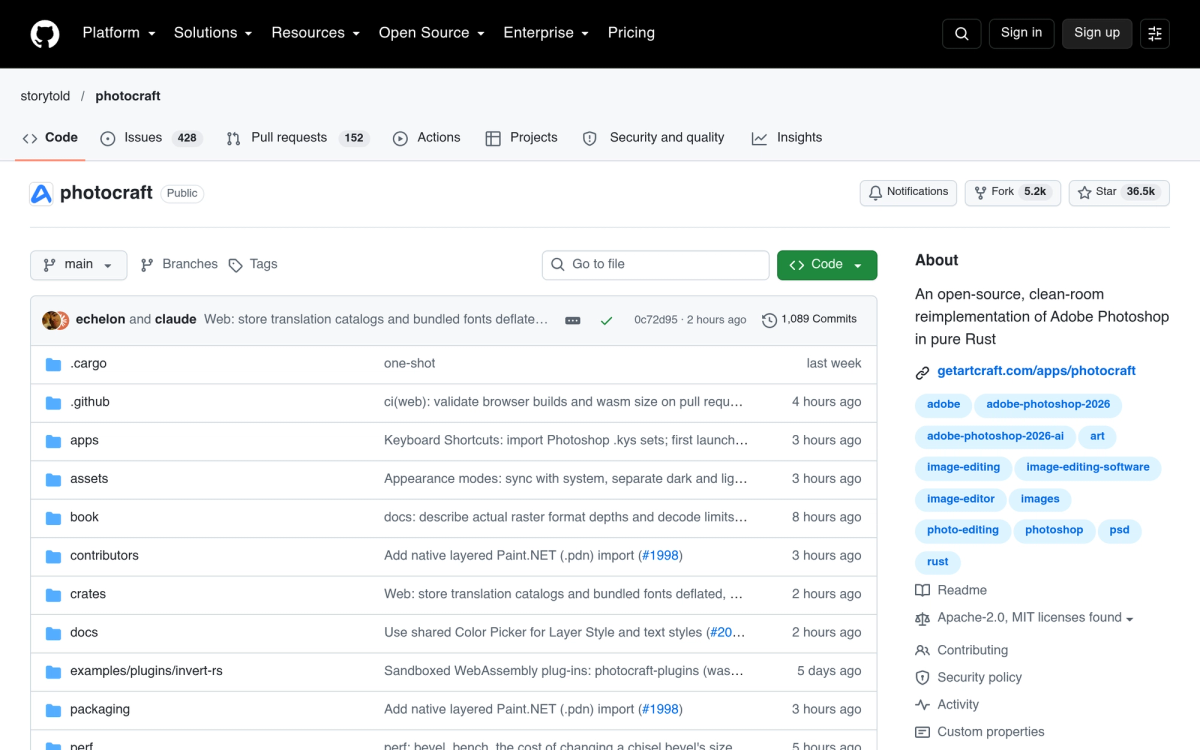
Related reading: open source is having a big month: PhotoCraft, the open-source Photoshop alternative in Rust (directory listing) is part of the same ecosystem momentum OSS Scanner protects.